
Organic Content Is Your Cheapest Ad Creative
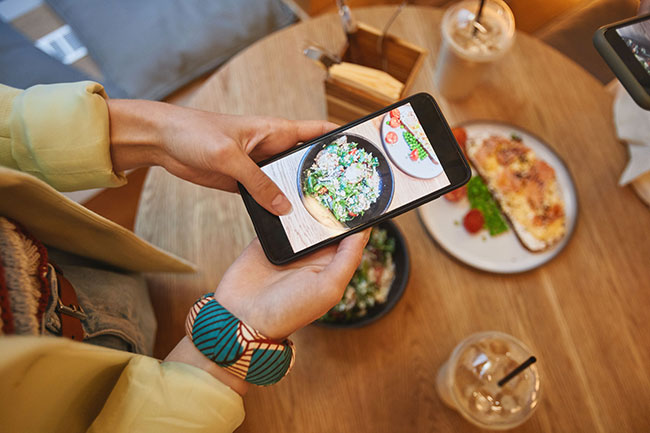
Most restaurant marketers assume social media success requires some amount of spending. The myth persists that meaningful results demand influencer budgets, paid amplification, and outspending competitors. For franchise operators running lean marketing, that assumption becomes a barrier to entry. We are here to tell you, don’t be daunted. Social media remains the everyman’s tool, and the reality shows us how.
Restaurants generating double-digit sales growth on social aren’t necessarily the ones spending the most. They succeed because they analyze the right metrics and build repeatable systems.
Pay your partners in food.
Food creators who receive product or dining experiences produce more authentic content than creators contracted for money. Evidence shows again and again that authenticity performs better in social algorithms. It also costs next to nothing. The insight, then, is to expand beyond traditional food influencers to community pages, neighborhood guides, and lifestyle accounts. These creators reach local audiences who already trust them across multiple categories. Their recommendations carry different weight than dedicated food accounts.
A scalable model like this involves identifying creators, setting clear content expectations, and managing volume. This isn’t a workaround; it’s a legitimate structure that will deliver measurable results.
Organic search is a safe (and fun) test environment.
Before spending paid dollars on polished ad creative, restaurants should test content organically. Every post reveals what hooks viewers, what formats keep their attention, and which products interest them. The content that performs organically becomes your cheapest and most effective paid asset.
In a recent case study for a quick-service restaurant, one organic post from a trade-based creator generated 474,000 views and 49 cumulative days of watch time at zero cost. Repurposing that content into paid ads lowered cost-per-result by 78 percent compared to traditionally produced promotional creative. Organic performance data should drive your paid strategy.
Measure store-level impact instead of vanity metrics.
Follower counts and reach don’t determine whether social media earns its place in your marketing mix. Year-over-year same-store sales results tell a meaningful story. Connect social activity directly to figures such as entrée volume or revenue growth.
Restaurants that track this way will discover which content formats, creators, and platforms drive customers through the door. Everything else is activity without accountability.
Build systems you can repeat.
The brands seeing social media success operate consistent content engines, putting out a regular volume of authentic, platform-native content. Influencer activity can expand into networks that grow across markets without requiring you to allocate budget. Then, you can think about paid amplification layered on top of organic performance data. The more your systems work and are systematically measured, the stronger your marketing infrastructure will be.
For restaurant marketers constrained by budget, this opportunity is significant. Discipline matters more than spending power. Clear measurement is more pressing than gathering vanity metrics. ASTRALCOM is here to help your restaurant brand build social media systems that drive measurable store-level sales growth and develop a systematic partnership strategy.

